
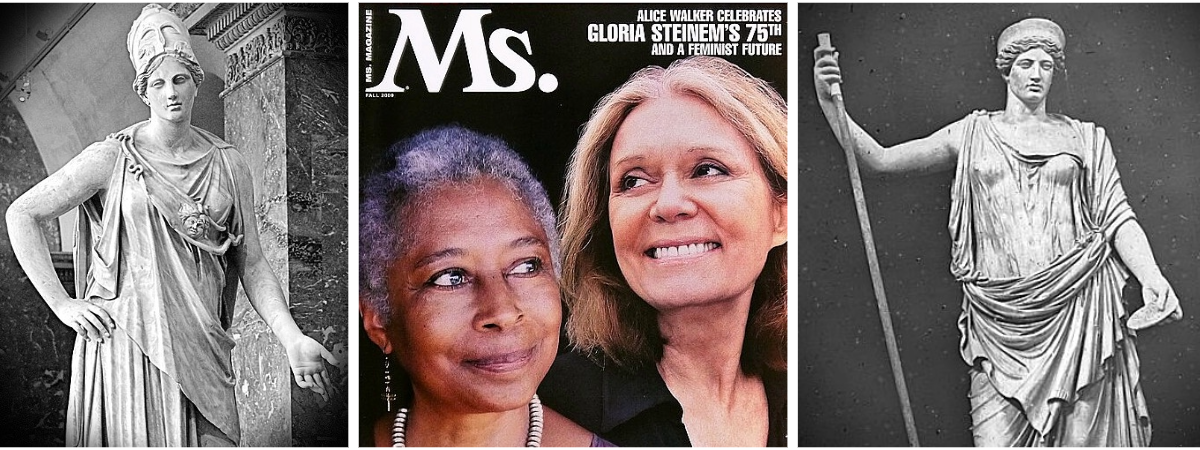
Women hold up half the sky

I became a feminist long before I even knew there was any word for it.
That view grew vigorously within me amid the years I watched the loutish way my Dad regularly bullied my Mom. My view was steadily reconfirmed into our present day, as I’ve observed how women in society still tend to be sidelined, picked on, belittled and stifled.

Not all women, of course, and not all the time nor everywhere. Still, it’s easy to see how the oppressive, old-school chauvinism Margaret Atwood plotted for “The Handmaid’s Tale” still proves able to lift a leg in our modern era and sprinkle its effects about. Look no further than a roundup of deluded yet pushy influencers cited in the recent May issue of The Atlantic: “The Men Who Fear Women,” by Helen Lewis.
Now, it might be that, deep down, my father actually did feel terrified of women. However, on the surface, he always tried his level best to ensure most of his bolts and jolts of fear ran the opposite way.
To offer a tiny (yet resonant) example of this gent and his works, I’ll cite the scream-fest he’d lay on Mom if she found herself unable to start our Pontiac station wagon on the first crank: “You have to make it work! You’re ruining the car! You’ll wear down the battery! What’s wrong with you, are you stupid?”
He accompanied such verbal hysterics by pounding his fist on the hood, hauling her out of the driver’s seat, grabbing the steering wheel himself, then starting the car on its next crank—easy to do, since the carburetor was already primed. He’d simply seized a chance to make one more demo of his innate superiority. As an unquestioned Alpha Male, you see, he excelled at not only starting a car, but at anything having to do with everything.
And six-year-old Paul (me), upon seeing this, would think (here, I translate lil’ kid impressions into adult verbiage): “Even if a crank or two can hurt a car battery—which I very much doubt—what might one lousy car battery even cost you, compared to the price of trashing your whole relationship with your wife?”
MISS THE BOAT? YOU’LL NEED TO SWIM…
I managed to reach the age of forty-two before I found out my mother had a wicked sense of humor. That’s no joke. And a small chunk of the overall tragedy of my father’s life was: he never got to discover it, himself.

By that point, he’d been billeted in a local rest home with a galloping case of dementia. Perhaps he wasn’t so invincible, after all. She had her own age/health issues, and one was a broken hip. I took a leave from work to fly across the country and be Mom’s main caregiver during the weeks she recuperated from replacement surgery.
“Soo-o, these are my Golden Years,” she joshed. “And to this, I say, ‘Ha!’” Another great line that won a frequent workout: “Oh-h-h, to be seventy again…” If I beat her in a game of checkers, she’d fuss at me in colorful terms and accuse me of cheating while her back was turned—although it never was. To keep her going, I’d palm a piece, show it, then ask her to guess where I’d hidden all the others. And I’ll never forget the day I brought my fiancée into her home to announce our engagement. Mom soberly told her, “Well, dear, you have my sympathy…”
My bride and I still laugh about that, nearly thirty years on.
But the total number of sardonic jokes that I recall her uttering during my childhood was zero. I suspect a primary reason was that my imperious, controlling, domineering Dad ensured that life with him would never be a laughing matter. In our household, he was the one being empowered to feel or reveal an emotion. Usually, it was anger.
Others in his vicinity? Not so much. Or, really, at all.
And God forbid (God being a personage much like him) that anyone dare to refute his management decisions by responding with a dose of sarcasm or criticism. His infallibility, far mightier than the Pope’s, lay way-y past questioning by mortals. Attempt it, and you’d be blasted with his withering wrath. In comparison, lightning bolts from Zeus were only sparks.
Since those days, I’ve mentally conducted a forensic audit of the psychological motives behind the dismal zone he engineered and maintained. I’ve attained perceptions, even conclusions, as to the causes. But I shan’t recount any here. I’ll merely summarize a key finding: the stresses he foisted on all of us found a counterpart in those he inflicted on himself.
As orator and abolitionist Frederick Douglass pointed out: slaves indeed do suffer; yet at the same time, a slave-owner stews in the corruption of his own soul. Or as Jesus once said, “With what measure you measure, it shall be measured out to you, pressed down and shaken together.”
It appears there’s an array of causes for dementia, some known, but a lot not. Even so, the icy isolation felt by a tyrant as well as the severe lack of a nurturing intimacy that should bolster people in life, these likely create formidable stresses. Enough to accelerate anyone’s decline.
To put it simply: we humans were never built to live in such a way.
THE NAME OF THE GAME
Psychic politics of a so-called battle of the sexes can depend on how we categorize its general interactions. One broad theory is the “zero-sum game,” in which one party’s advance equals an alternate party’s loss. The sole route to victory, then, must lie in defeat of another.

Life appears to hold many zero-sum games—with contests in sports as one prime example. Giants win? Well then, Dodgers lose. Giants are able to head to the playoffs, Dodgers must head for the showers. Peer under that deceptively simple result, and matters grow more complex.
Flush with victory, maybe the Giants turn overconfident and blow their league championship games. But the Dodgers analyze shortcomings, shift personnel, revise training. The very next year they bounce back to sweep the World Series. The lesson? A win handled badly sets you up for a loss; a loss prompting shrewd remedial measures prepares you to win.
And what’s so strictly zero-sum about all of that? Men would do well to glance under the hood of a supposed triumph over their partners and examine a mechanism of cause-and-effect that continues to putt along without pause…

Similarly, a once-over-lightly take on evolution might make someone leap to a conclusion that competition constitutes its main engine. But that’s not a full read. Probe deeper. Cooperation within a species, or even between various species, might be also noted as a potent theme. What if evolution is a twin-engine, not a single-engine airplane? Emphasize one aspect at the expense of another, and you might wind up trying to fly with only half of your available power. (And good luck at crossing the Himalaya if you do!)
In fact, drill into ecologic wisdom, and one can perceive that even apparent competition is merely a subset of a huge web of cooperation. A galaxy of life forms continually weaves its web of subsistence and growth. All entities enjoy a full-time invitation to participate as best they can.
As the poet says, “a lion’s claw makes fleet the antelope’s hoof.”
Even apparent conflict might only constitute an intro to a deeper cooperation.
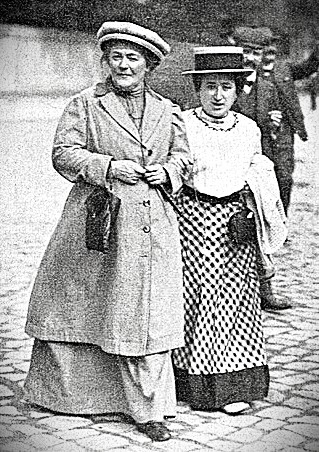
Much different from a zero-sum-game is the non-zero-sum option. At max extension, this alternate process mandates that any gain for one party might easily be shared with others. A see-saw board is able to balance, then elevate—not just thump down to one side or the other. Thus, it’s not de rigueur for us to always end up with losers.
Let’s end this section via a short pair of quotes on game theory.
“Pursuing individual interest can enhance the collective well-being of a group. But in other situations, parties who pursue personal interest can create mutually destructive behavior.”
“Applying zero-sum logic to scenarios that are not zero-sum in nature may lead to incorrect conclusions.”
THE WOW OF THE VOWS
A cursory (yet objective) review of traditional wedding vows (except for that odd bit about, “obey”) can reveal a strong commitment to long-lasting and even-tempered fair play. A review of most divorce filings likely reveals the commitment didn’t prove quite as transparent or durable as both parties might’ve hoped.
Nevertheless, a core message remains clear: once upon a time, a marriage relationship had been designed, fostered, and approved as a non-zero-sum game. Ideally, that’s how it should’ve played out.
A firm, reliable and relatable contract between adults to create this achievement is a best-management-practice. As biological entities, each of us seeks a modicum (if not a plethora) of power in this world to survive and to thrive. But if you enter a partnership with another person, why vampirize your own teammate for a droplet of fresh power for yourself?
In a world fraught by so many zero-sum game plays, how does it make sense to shove a primary relationship into a weary iteration of the same old crap? Can’t an intimate human bond be rendered more special and sacred than that? Did you not swear that it could and would be?
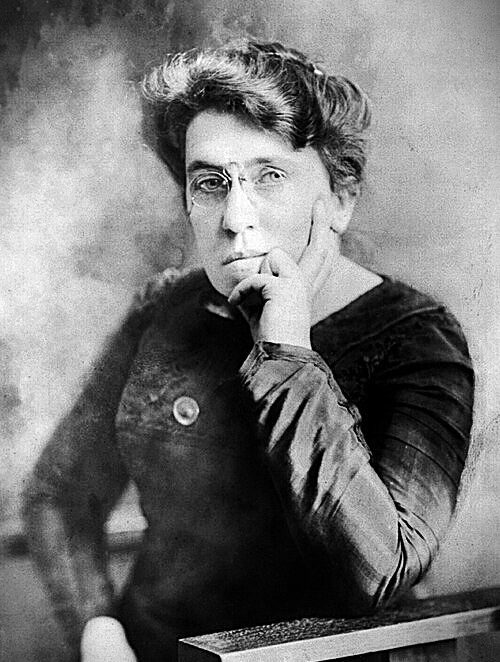
Get creative and envision a different way! Protect and nurture your teammate’s power, don’t subvert it. Then, you can turn to face all the challenges of existence as a unified entity. Struggling against one another is a sad waste of juice and moxie. Aim for success together, however the pair of you choose to define it.
Oppress and exploit your partners, and you weaken both them and yourself. You’ll drill holes in the very boat you hope to row. (Fine skipper that you are!)
That same problem writ large becomes evident in a nation when half its voters disparage and condemn the other half, and a partisan warfare erupts that blinds and disables and distances all combatants from any genuine effort to deal with the problems they ought to face and solve as a team. Internal and external problems worsen as both parties sink into a mire of unseized possibility with their fingers fiercely wrapped about each other’s throats.
FORWARD INTO THE PAST
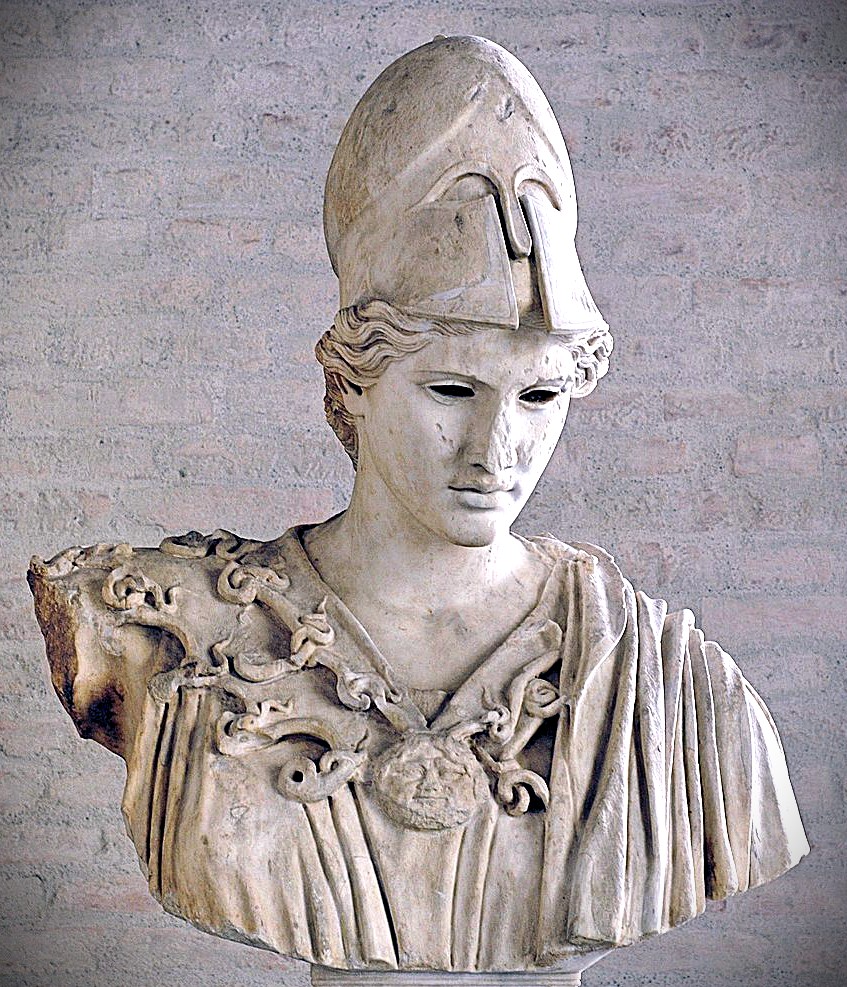
Feminists lament patriarchy’s seemingly ineluctable weight. Yet it’s true that human tribes—like many other animal species—did and do flirt extensively with matriarchies. And even in some portions of our present-day culture, women proceed to dominate in areas (teaching, nursing, counseling, museum and library operations) simply because their gifts (and interests) constitute a better fit. In still other areas (politics, filmmaking, law, corporate governance) talented women have assailed male battlements to fight and slog their way to positions of considerable prominence.
But overall, our suffragettes have been forced to struggle and suffer whilst clawing their way toward a bare semblance of equality—in areas such as fair pay, control and ownership of property, full personal agency, legal status, management of their personal health and fecundity, even a right to vote. Such efforts, rewarded by gradual, spotty and at times stunningly reversed successes, have occurred, not just over decades, but centuries.
Or might millennia sound like a more fitting time frame?
That’s why it’s so utterly infuriating to all of us feminists that some male influencers mightily seek to ratchet back both the clock and women’s hard-won gains in such important matters.
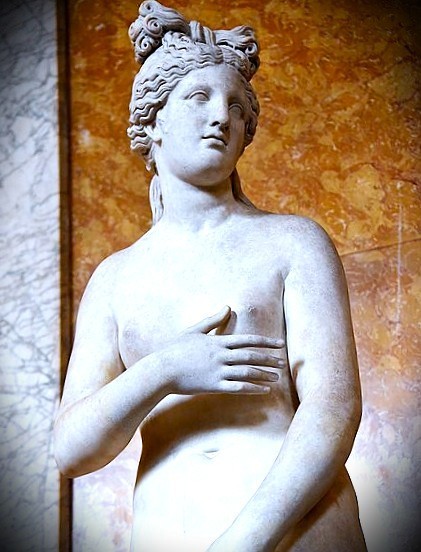
Humanity tends to go all wobbly in the face of nostalgia, no question about it. We prefer to place optimism either in a distant past or into the far future—anywhere but our present, where we might need to do a staggering amount of labor to bring a sunny ideal to actual life.
For Asians, a legendary heyday was the era of The Yellow Emperor, founder of China, who brought heaven and earth into total harmony. Human virtue hasn’t looked quite as sublime in their hemisphere ever since. For Westerners, it might be the epic age of the Trojan War, when heroes bestrode the earth who could lift a boulder so weighty that, “ten men, such as men are nowadays, couldn’t raise it.”
Legend has it that Alexander the Great slept with the Iliad under his pillow, to remind him of a bygone era and inspire him to resurrect its themes. Julius Caesar, then Napoleon long afterward, both mourned their failure to achieve all that Alexander had by a similar age. This is a roundabout way of saying: the invalidating tug of purblind nostalgia was ever thus.
But a way forward is never found by either looking back or shuffling backward. Time’s transmission has plenty of gears. However, you won’t find full reverse among them. Bells can never be un-rung; shots fired can’t be called back.
BONEHEADS ARE US
A pastor, Doug Wilson of The Community of the Reformed Evangelical Churches—and one of Pete Hegseth’s clearly adept spiritual advisors—avers that the 19th Amendment to the U.S. Constitution (which secured women of a right to vote) ought to be repealed.

Various other primal pundits quoted in Lewis’ Atlantic story, like Nick Fuentes, have advocated confining women to breeding gulags. Either they do or don’t have any notion of how inane and unappealing this makes them sound. But in either case, they advance a truly useful agenda not one jot.
Combine that messaging with such trends as, “masculinism,” “looksmaxxing,” and “TRT” testosterone enhancement, and you wind up with an almost perfect storm of unmoored, chuckleheaded, MAGA-male delusion.

To find your success with fine women, how would you guys like to use a tip from an Analog Man of a (much) earlier generation? Solicited or not, here you go! First, render yourself as healthy as possible, mentally and physically. Economically, too—by which I mean, you need not be wealthy, just solvent. Display a trend of consistent black in your ledger. Beyond that, seek to be adept at fixing stuff in the house and around the estate. Mundane chores like gardening or cooking or washing dishes and windows should not be put beyond your remit.
In all other dealings, demonstrate that you’re prepared to be patient and generous, kind and fair. And to truly show yourself off to best advantage, several times a day, try to shut up and listen for a bit—that always works like a charm.